Painted Shut
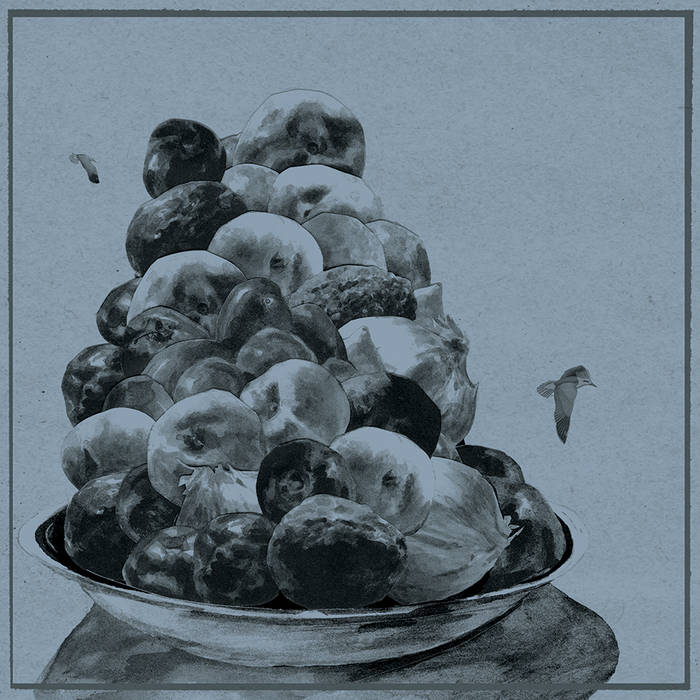 |
Released: May 4th, 2015 Written by: Hop Along Produced by: Hop Along & John Agnello Genre: Indie rock Label: Saddle Creek |
|---|
Background
Painted Shut is Hop Along's third album, being written over the span of two years and recorded in one month's time, a lot of it being tracked live. Unlike past projects, the album was mostly written together as a group.
The band attempted for this record to be more straightforward than their past work and let the songs "speak more for themselves."
"As you get older, sometimes it gets harder," Quinlan says. "Your challenges get greater because, hopefully, you're getting better. Complacency shouldn't be the answer. We went pretty far from what's comfortable for us to strip songs to a more straightforward sound."
The cover was created after Mark Quinlan reminded Frances of how they used to be into Spanish paintings featuring bowls of fruit. They were inspired by the idea of the fruit rotting while the artists painted them and thus becoming inedible. The cover is blue, as Frances considers the color to be unappetizing.
I like the idea of being a bowl of food that nobody can have. There's something tragic to that, right? Here's plenty of food that no one can touch. I liked the idea of making a mountain of food and I've put the birds to kind of indicate the size.
Theme
While Get Disowned was more about Quinlan's own internal strifes, Painted Shut is meant to expand outwards into wider themes and other people. Specifically, the record addresses themes like desires, powerlessness, and how society isn't built for many people.
I would say the whole record addresses the circumstance of wanting without knowing where the end of that want is (which I think troubles most of us, certainly myself), and how incredibly impossible desire becomes when you are impoverished and can't take care of yourself. Our society wasn't built with everyone in mind. It wasn't even built with most people in mind.
There's something about success, the pursuit of success. That's another part of the record, for sure. When it just goes bad. [...] There are so many unreasonable aspirations in a way. And some of them are perfectly reasonable, but people are just smashed to bits. [...] I wanted to talk about mental illness, I wanted to talk about poverty and religion and things that I think anybody could use.
Notably, the record touches on the lives of real-life musicians Buddy Bolden and Jackson C. Frank in the songs "Buddy in the Parade" and "Horseshoe Crabs", respectively.
Tracklist
- "The Knock"
- "Buddy in the Parade"
- "Horseshoe Crabs"
- "Waitress"
- "Happy to See Me"
- "Texas Funeral" *
- "Powerful Man"
- "I Saw My Twin"
- "Well-dressed"
- "Sister Cities"
Gallery
 |
 |
 |
 |
| Tracklist | Misprinted tracklist | Vinyl side A | Vinyl side B |
|---|---|---|---|
|
 |
 |
 |
| CD | Lemon LP | Pink LP | White w/ pink haze LP |
 |
|
|
|
| Cassette | Lyric pamphlet (1/2) | Lyric pamphlet (2/2) | Note from Frances that came with misprinted LP |
Trivia
The album was meant to be an attempt for Quinlan to "rein in [their] voice a little."
"[...] I know it's kind of insane sometimes and that's been a challenge because it's fun to scream. It's fun to freak out."
Some of the tracks were originally meant to be less upbeat than their final versions to reflect their themes; however, the band felt that it didn't feel right to play like that. "Powerful Man" is specifically cited to have "trudged along" at first.
Quinlan commented on the naming of the album:
Well, there had been a few names floating around and Painted Shut came up. Obviously just saying it sounds like two different phrases. It can sound like "paint it shut" or the way it's written. I like the idea of the past tense, having something that was painted close because in reality paint isn't strong at all, it comes right off with a blade or something. Something painted shut is easily turned open. And I like the idea of... When you go past an old house that is contained a hundred times, I've always like how those look, especially the windows that are painted shut.
The first pressing of the vinyl record was sent out with a misprint; the eighth and ninth tracks were switched on the sleeve. However, the tracks are in the correct order on the record itself.